
The Second Harvest
35.4 (length) x 45.2 (breadth) x 48.3(height)
by,
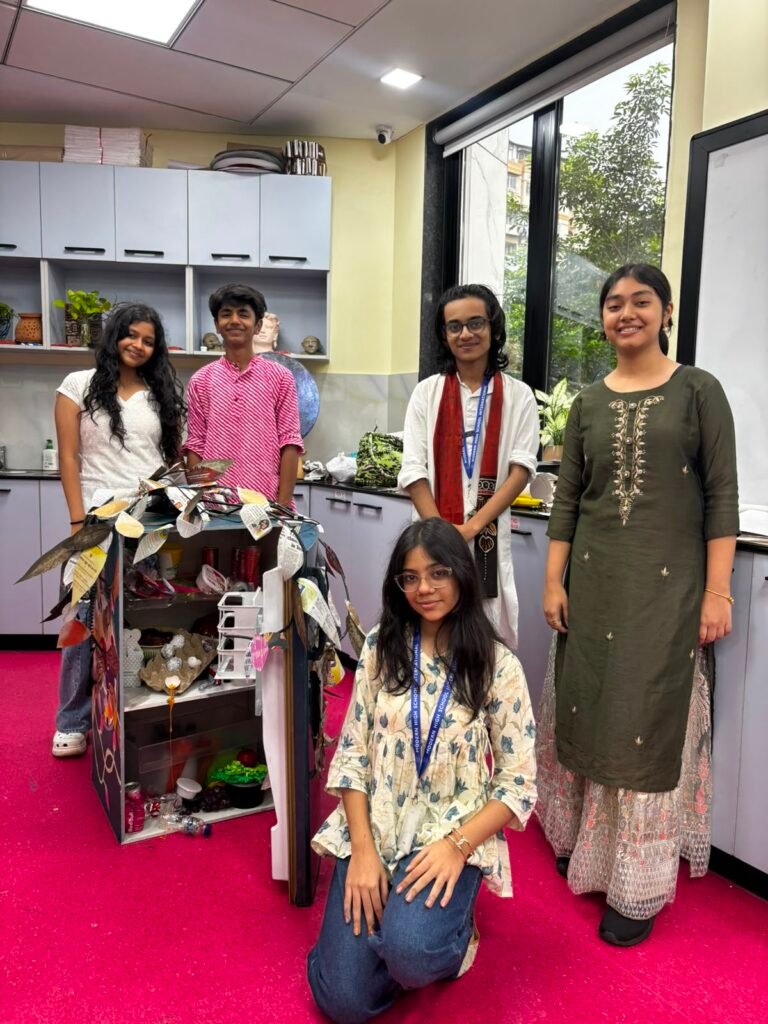
Anushka Dua, Rishi Mukherjee, Jaslina Chakraborty, Leysh Agarwal, Urvi Garg
Modern High School International, Kolkata
Material used:
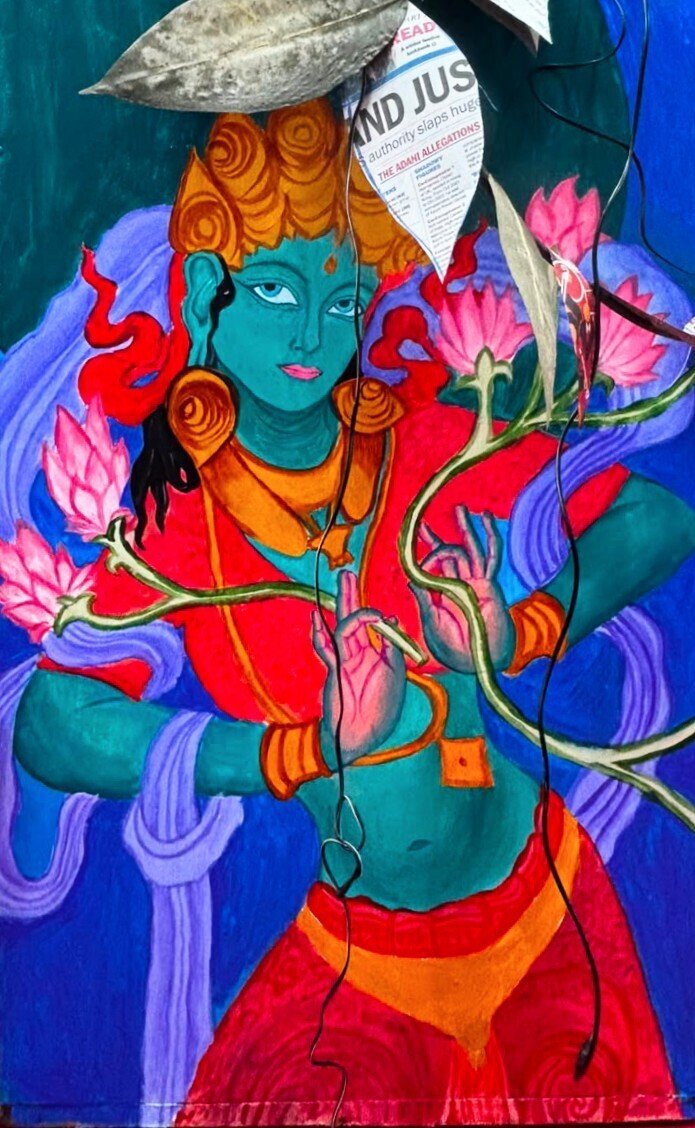
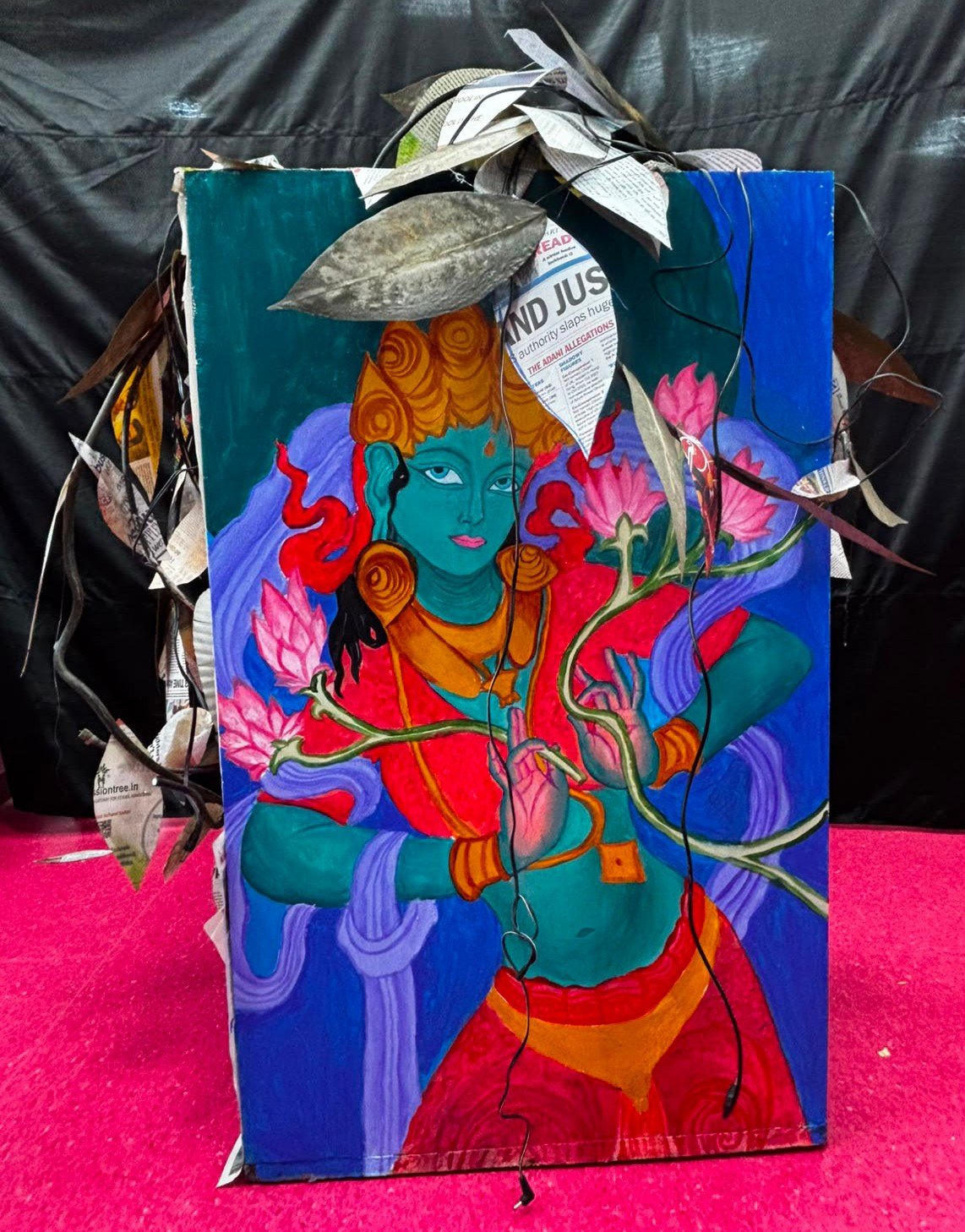
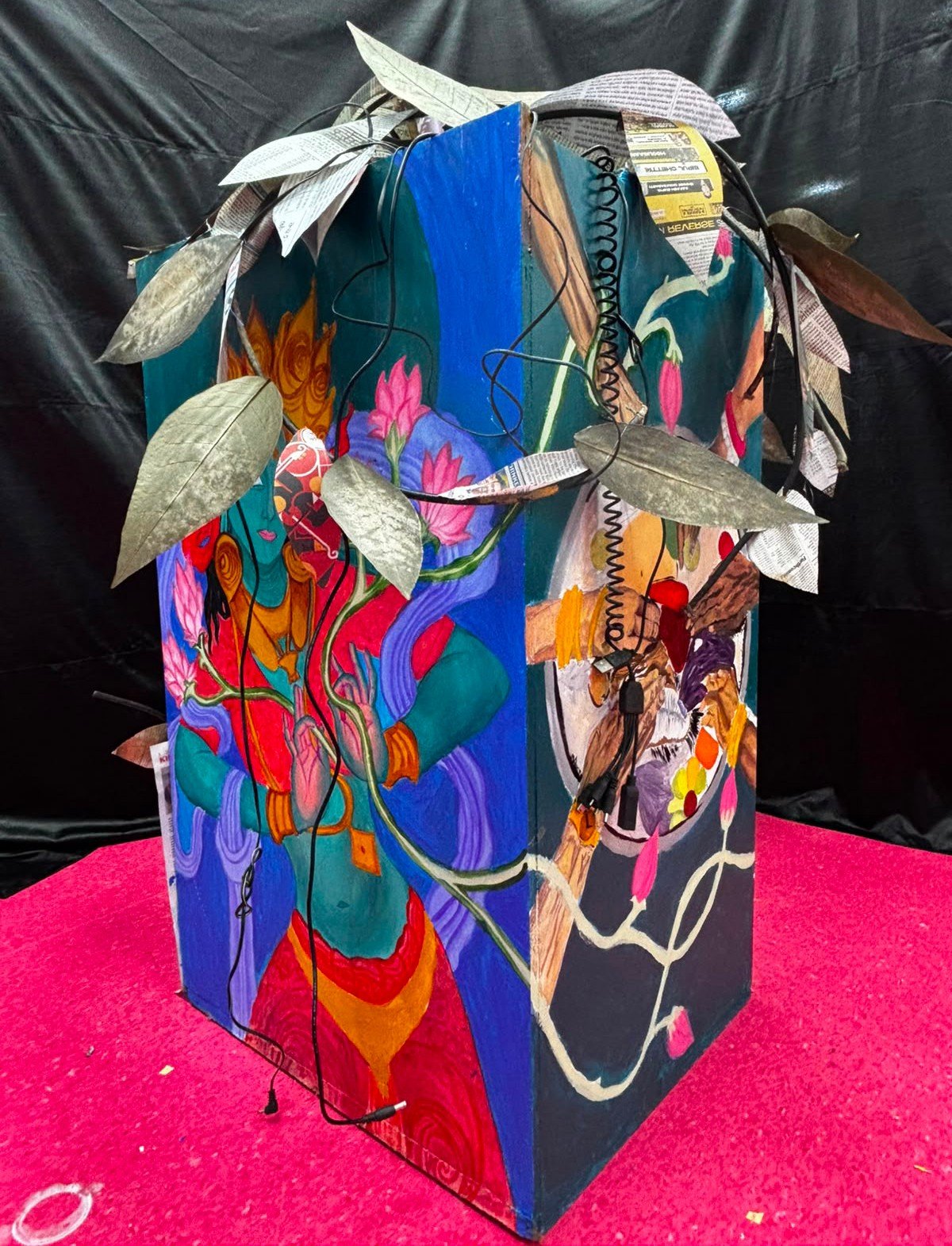
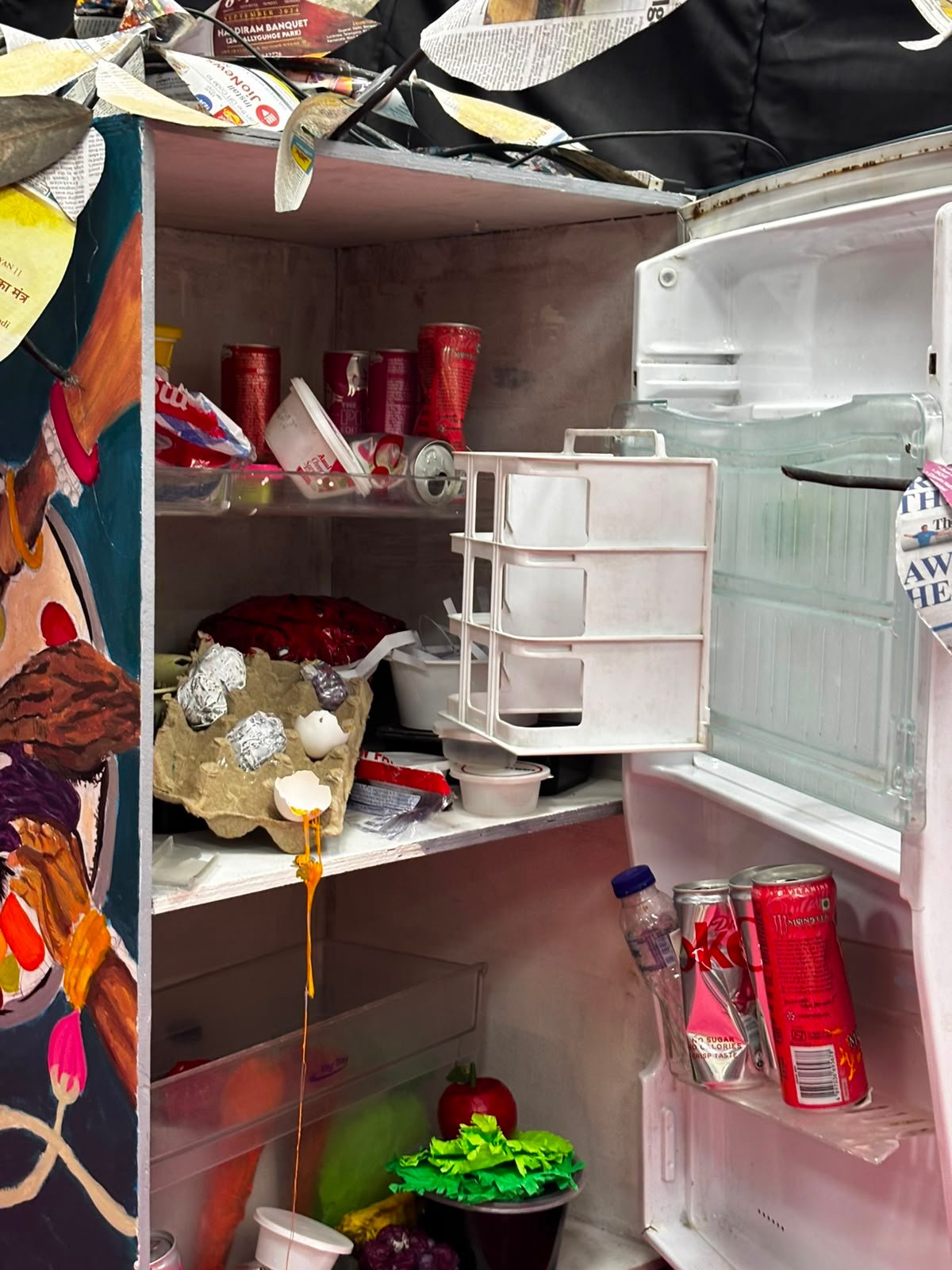
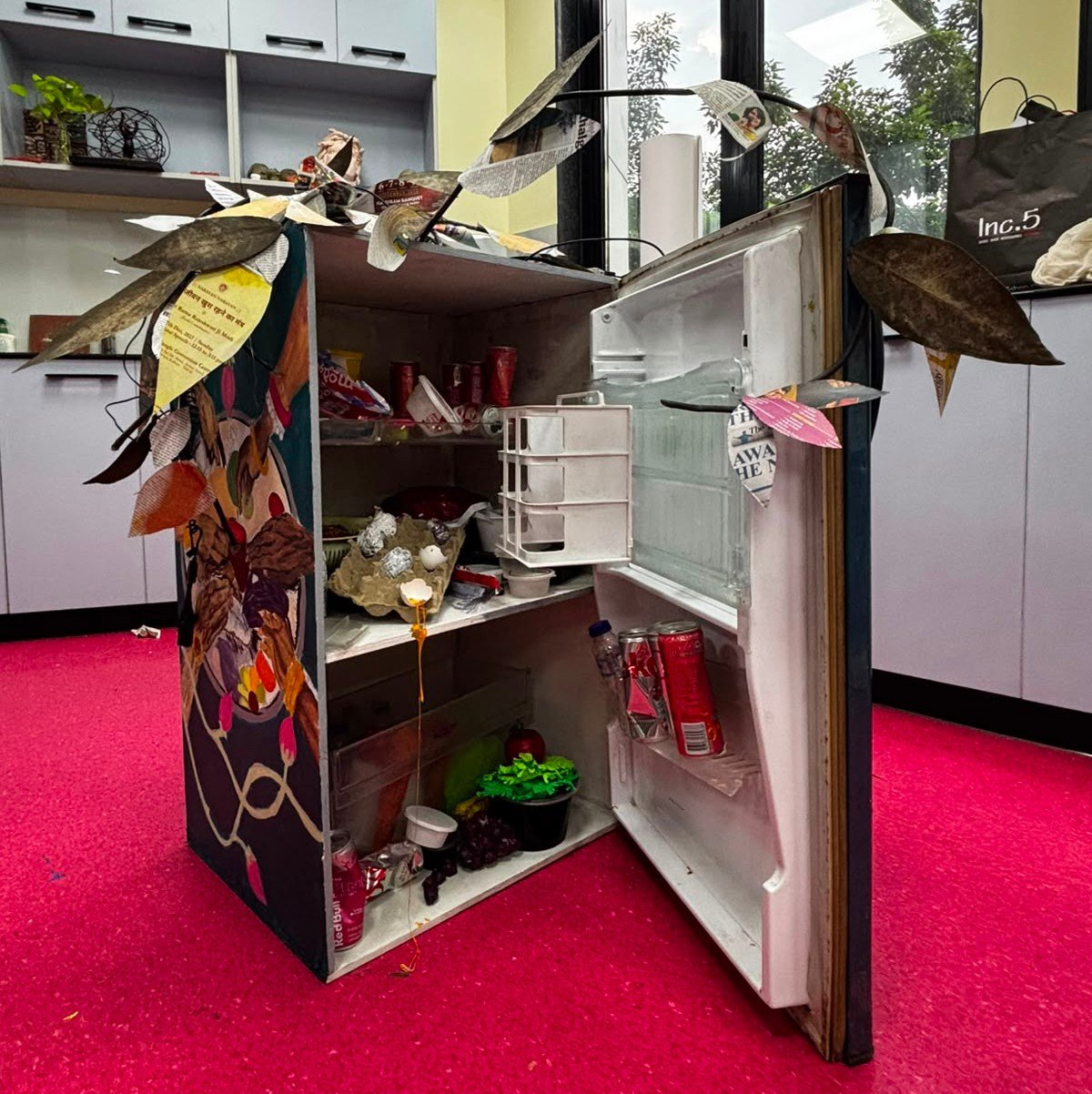
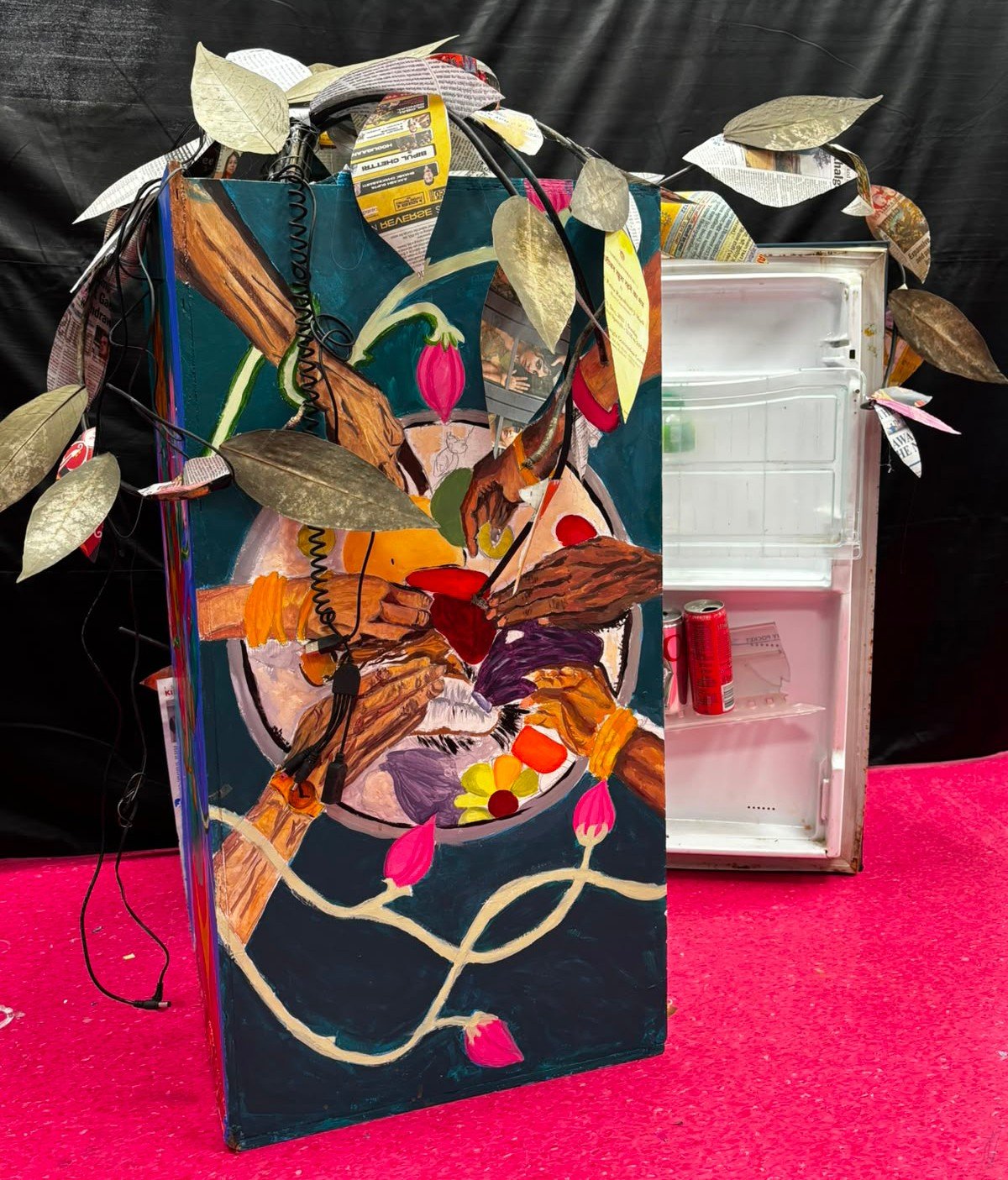
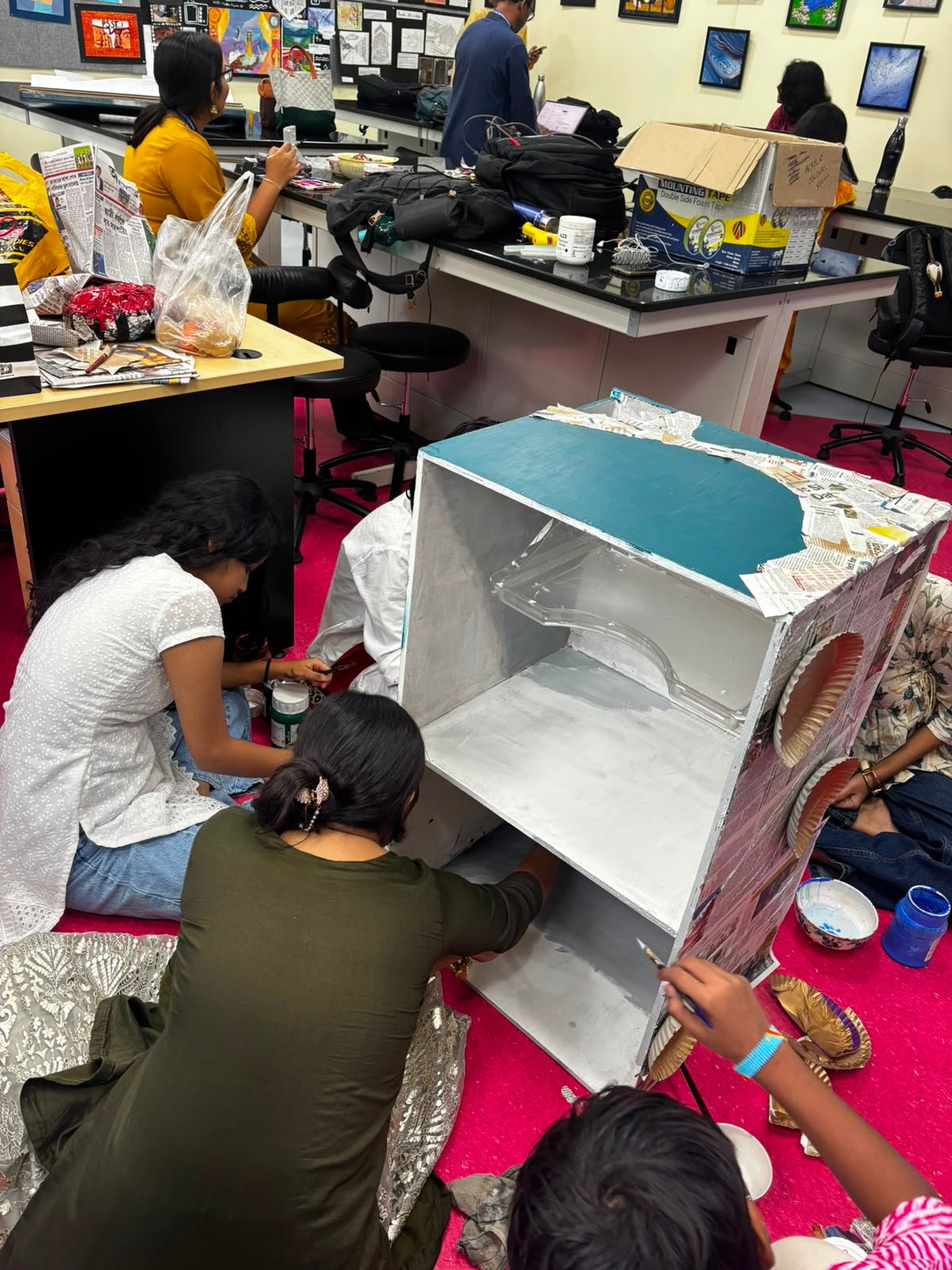
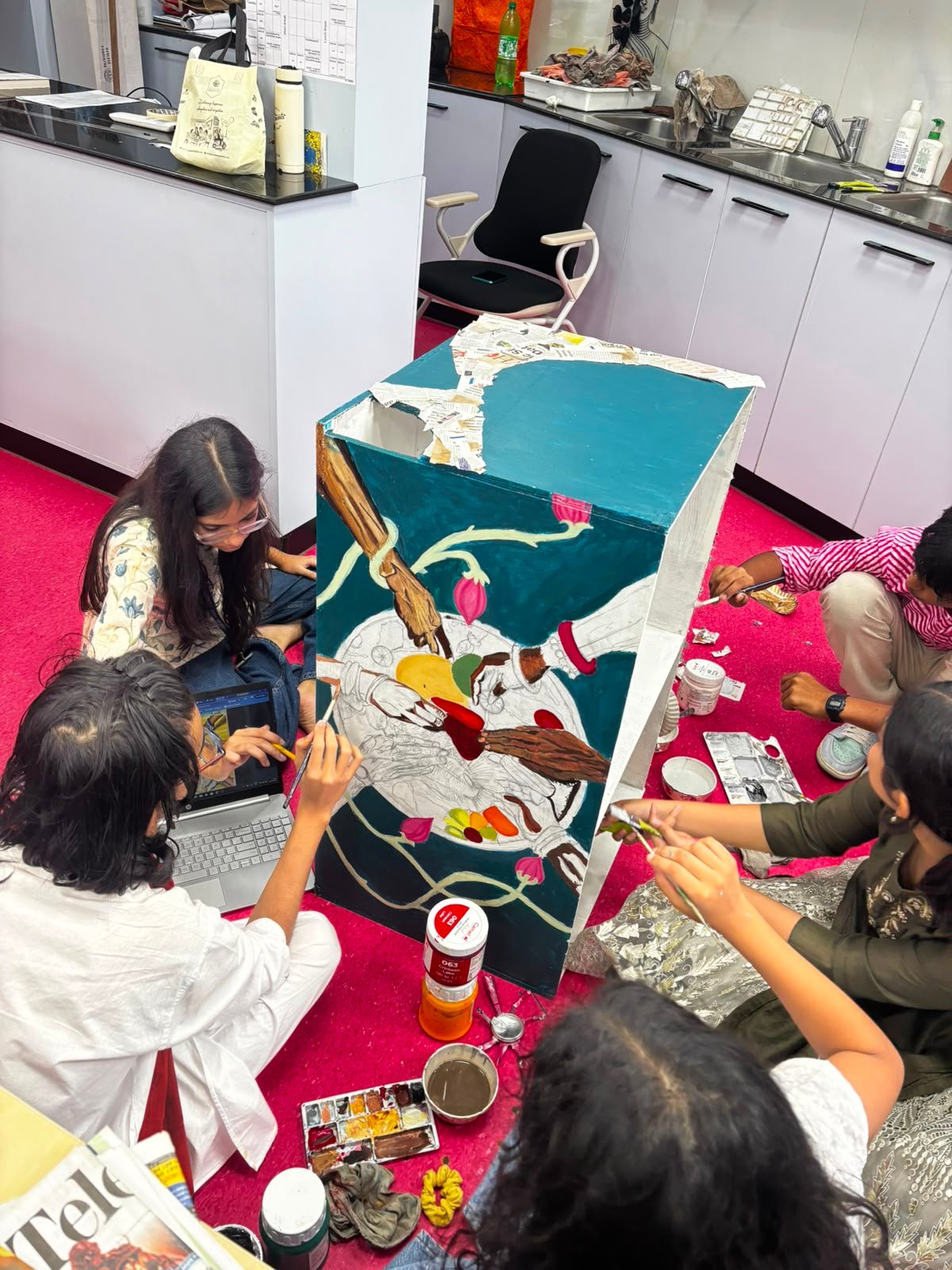
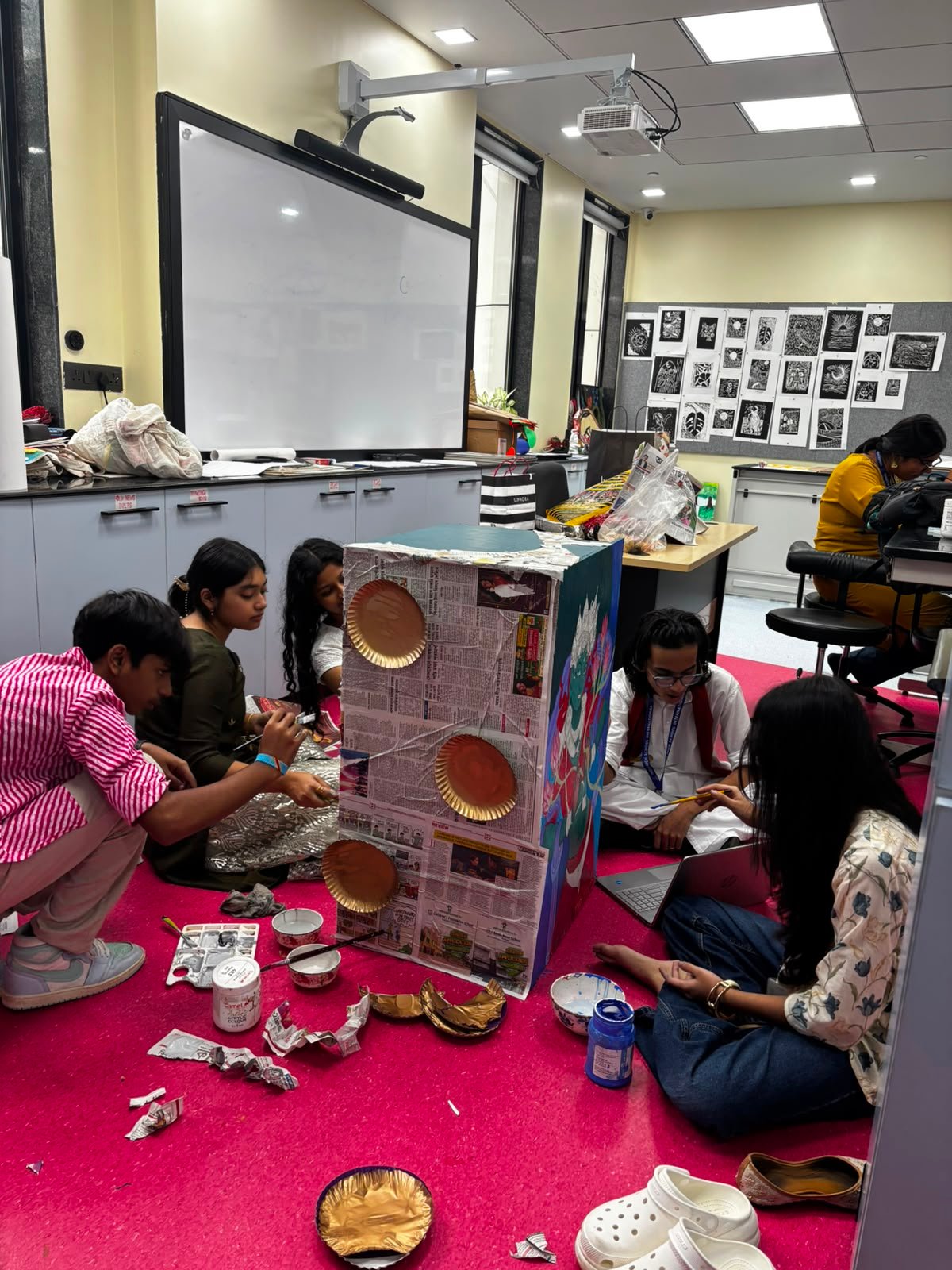
In our artwork ‘The Second Harvest.’, we have recycled multiple waste items to create a meaningful and impactful artwork. Our artwork can be divided into three major segments, the refrigerator, its contents, and the plant growing on top. For the refrigerator, we sourced a dysfunctional refrigerator door from a scrapyard, alongside some shelves to go inside of the fridge. Following this, we cut scrap plywood, leftover from home renovations, to measurements accurate to that of the door to create the body of our installation, in which we installed one plywood shelf and a few of the plastic shelves we had sourced earlier. The contents of the refrigerator are all made with waste material, including egg cartons, newspaper, and kitchen sponges, with help of acrylic paints and adhesives like ‘cello-tape’, ‘hot-glue’ and fevicol. We have also reused many plastic containers, particularly cans and take-out boxes. The plant was made using old, unused electronic cables, which were fed through the top of the refrigerator box and held in place using aluminium wire. The leaves of the plant were made with a combination of real, fallen dried leaves we collected from gardens and newspaper cut into the shapes of leaves. The outer and inner walls of the refrigerator were first primed and then painted with acrylic paints. Thus, a sizable portion of our artwork does come from waste products and materials, which comes together to create a cohesive artwork.

The Second Harvest – Back (Nature Goddess) – 1
The Second Harvest – Back Diagonal – 2
The Second Harvest – Interior – 3
The Second Harvest – Overall Artwork – 4
The Second Harvest – Side 1 (Hands Eating Off A Plate) – 5
WIP images – 5 Assembling Objects Process_
WIP images – 3 Painting Process_
WIP images – 2 Painting and Assembling Process_
The Second Harvest’ is the culmination of our attempt to frame the theme of the waste produced in light of overconsumption and its interaction with the natural world. Humans consume mindlessly, but in this consumption, often tend to, rather than actively consuming the items of their desires, passively hoard them instead, creating massive wastage of those very scarce resources. This overconsumption, in our artwork, is symbolized by the refrigerator, which is the primary subject of our installation. The refrigerator is shown to be overflowing with food items in various stages of decay and disarray, including moldy bread and cracked eggs, showing wastage in excess, with the ajar door giving the effect of the fridge having been abandoned in its state of plenty. The secondary subject of our installation is a plant, which looks like a creeper, growing out of the abandoned fridge. The plant symbolises nature’s reclamation of what humanity discards: what was deemed to be insignificant and worthy of abandonment to a human, is being reclaimed by the earth herself through her tributaries—vegetation. The back of the fridge and one of its sides also hosts artworks depicting a figure, with green skin, holding lotus stems, who may be imagined to be the Goddess of nature for any belief system one adheres to as a feminine personification of the entirety of the natural world, exemplifying her divinity, despite the Indianised apparel and accessories which adorn her, and a plate with several hands eating off of it, respectively. The plate represents the beauty and necessity of consumption in moderation, with the hands all sharing from one plate, which itself houses foods from various Indian cultures showing harmony. The lotus stems of the Goddess are not contained to just the back of the refrigerator but also transcend into the side with the depiction of the plate, again showing nature’s venture into the human world. Overall, our piece is a symbol for human greed and consumption, which drives wastage, which again prompts the one from whom all has been birthed, the Earth, to reclaim her belongings.
Price: INR 40,000/-
Art Prints:
A2 size Archival Digital Canvas Print (PP) Edition of 6: INR 12,000/-
A2 size Non Archival Digital Canvas Print (PP) Edition of 6: INR 9,500/-
The Team and Artwork
It’s very well thought.