
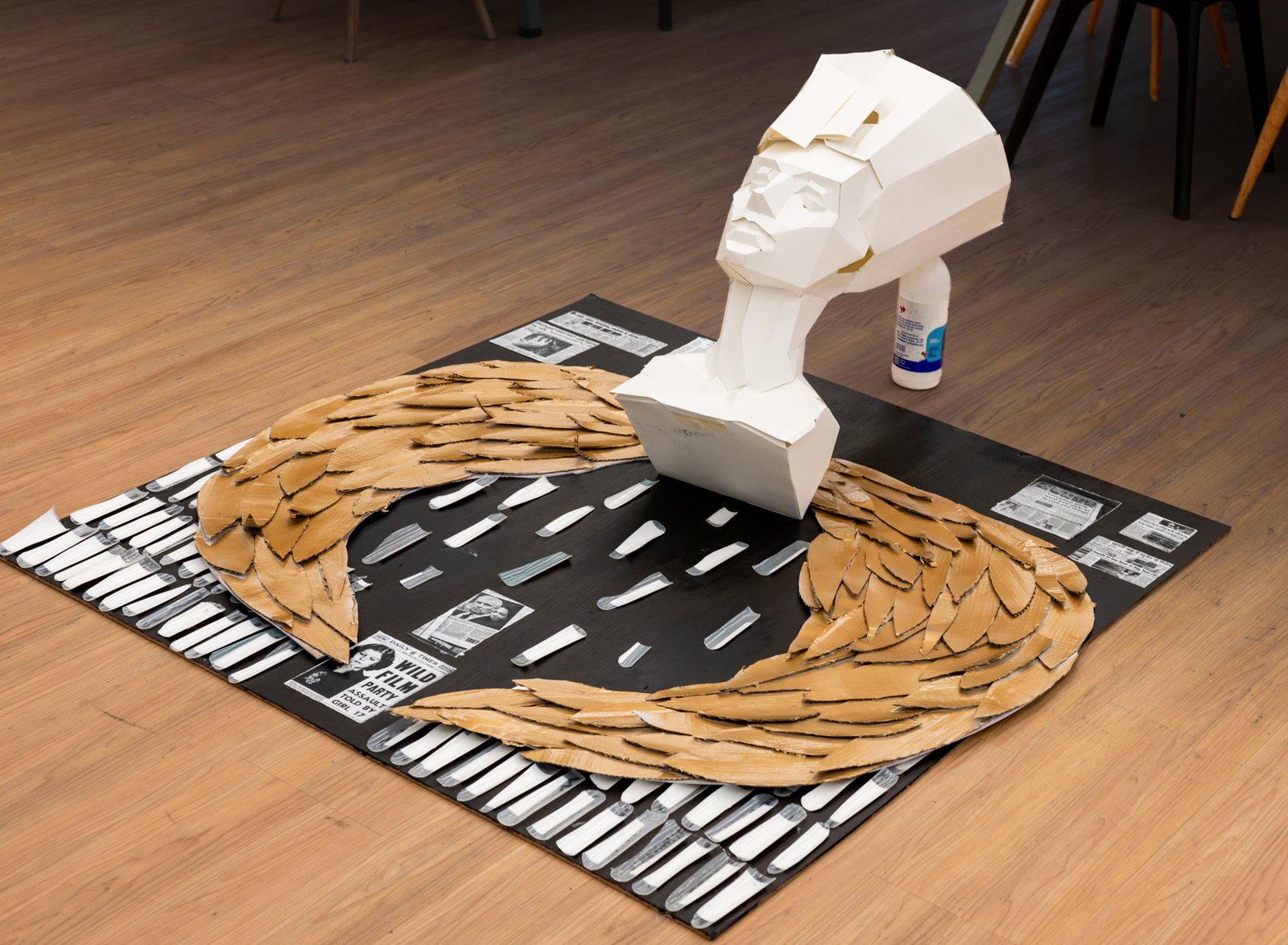
Echoes Beneath the Surface
72″ x 48″ x 30″
by,
Jazz Kavan Acharya , Bhairavi P Bharath
Adani International School, Ahmedabad
Material used:
Discarded plastic bottles, Waste cardboard, Waste foam board previously used for flex printing, Used MDF boards collected from the school basement, Newspaper cutouts and documented reports, Printed images and texts on waste paper, Recycled paper and other discarded paper materials, Acrylic paint and gold paint for surface treatment and visual transformation and Adhesives and basic construction materials for assembling the installation

Echoes Beneath the Surface – 4
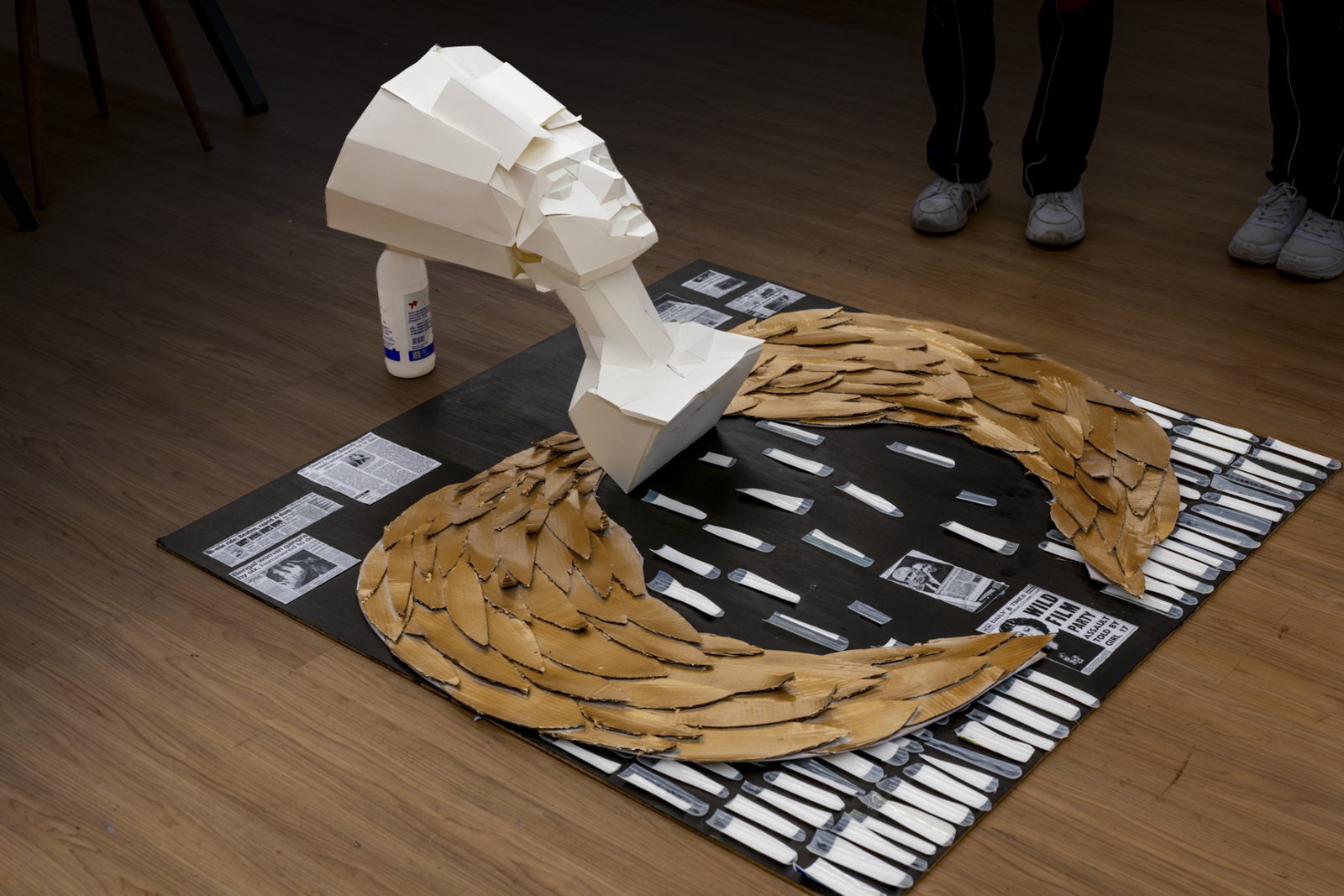
Echoes Beneath the Surface – 3
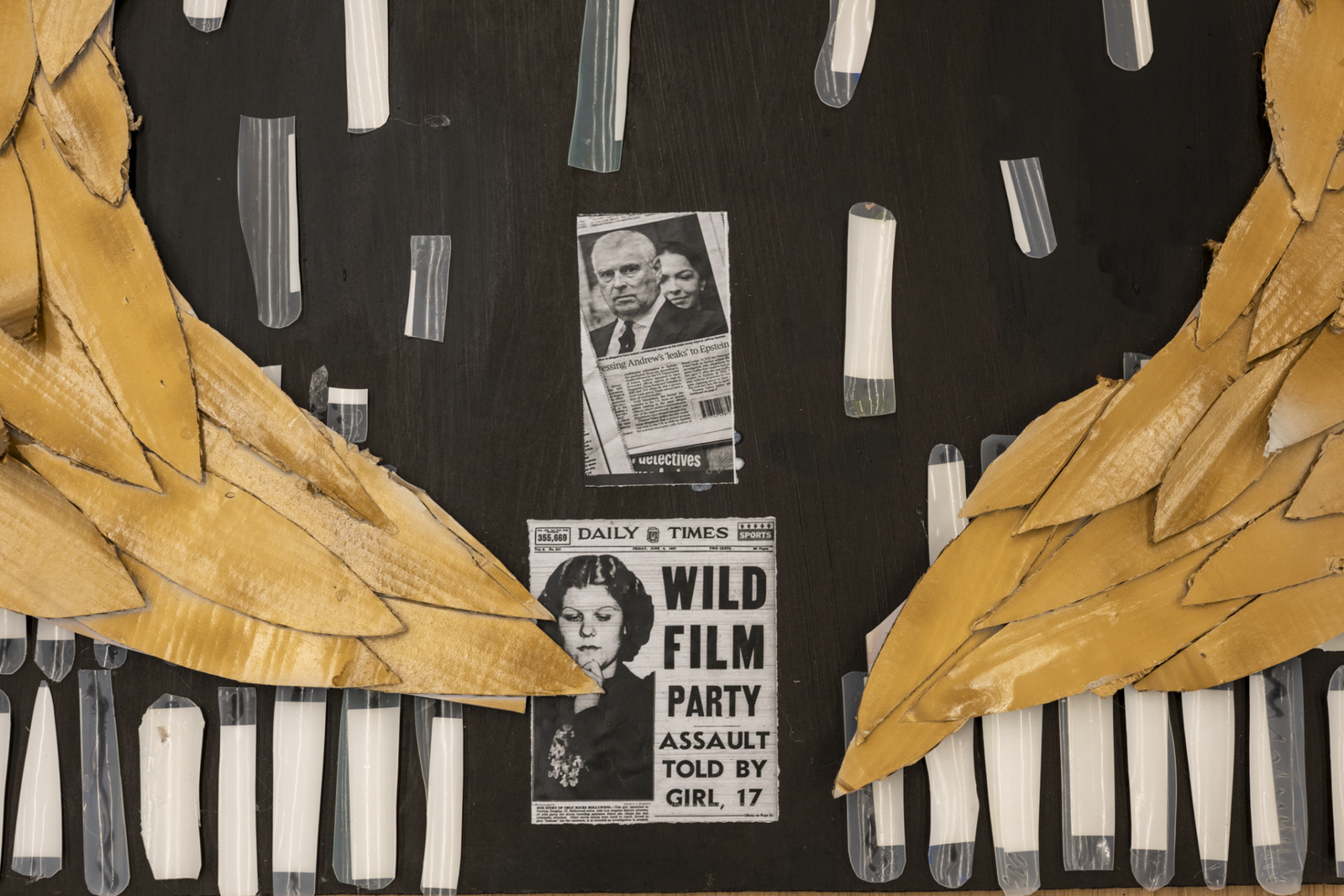
Echoes Beneath the Surface – 2
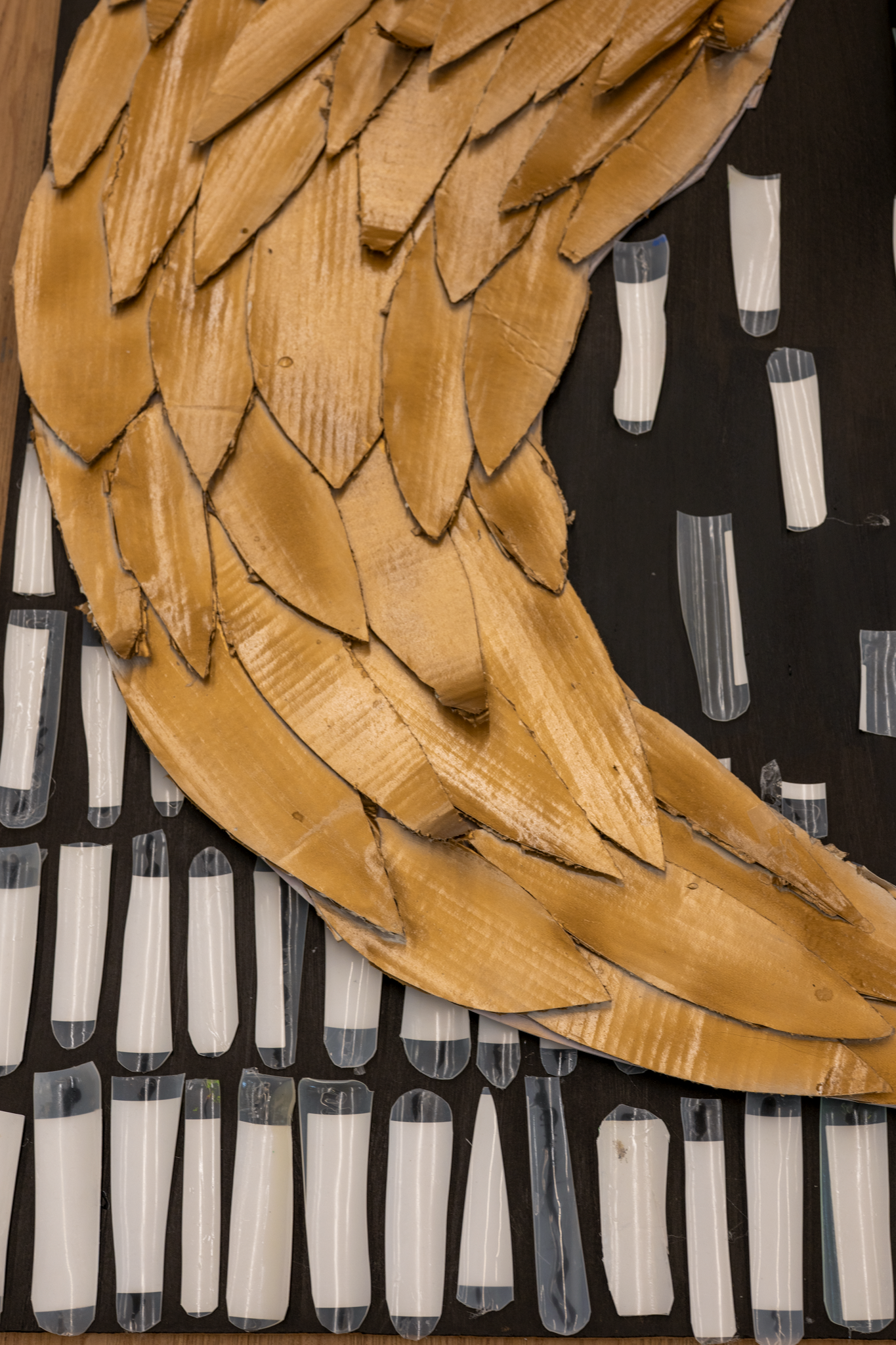
WIP images – 1
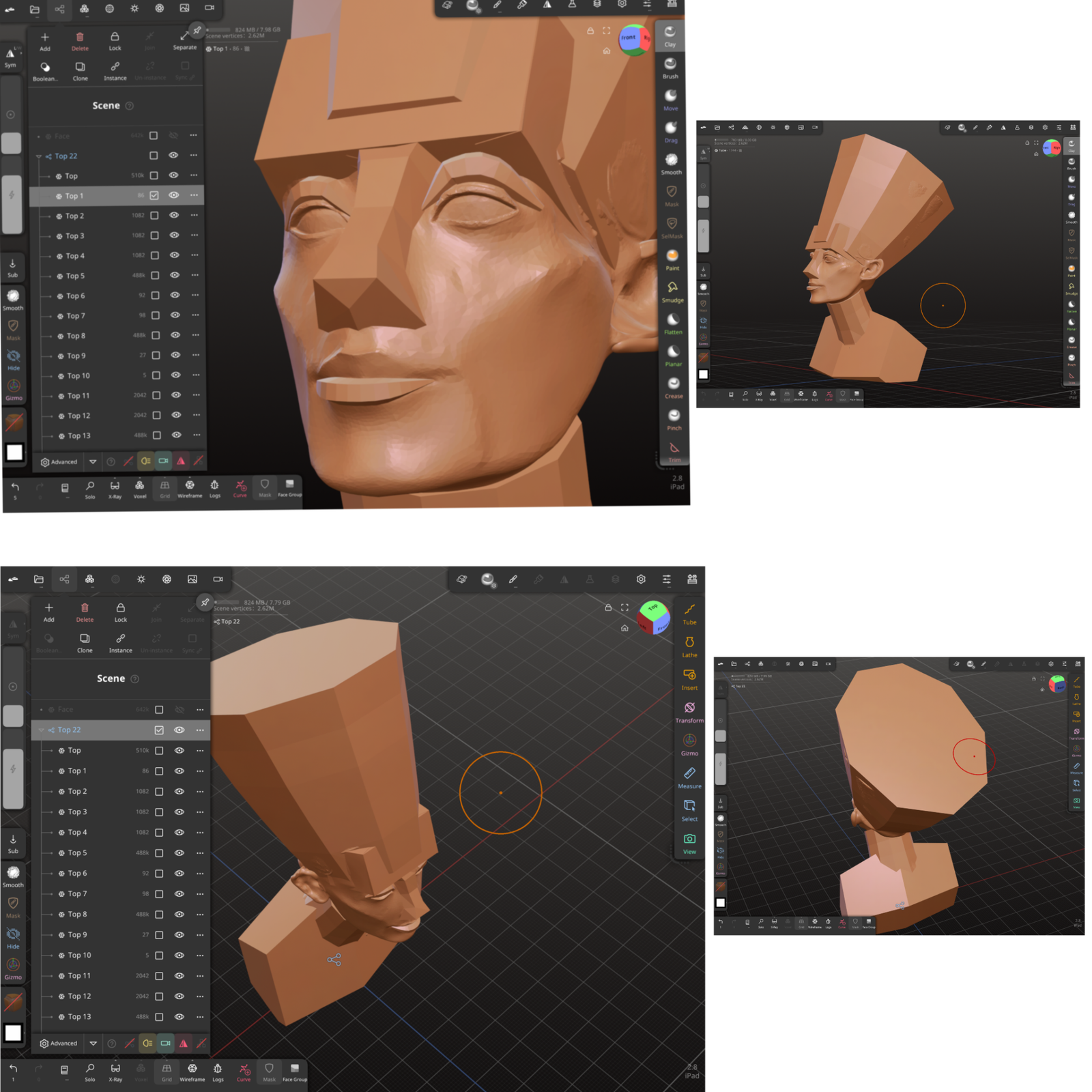
WIP images – 4
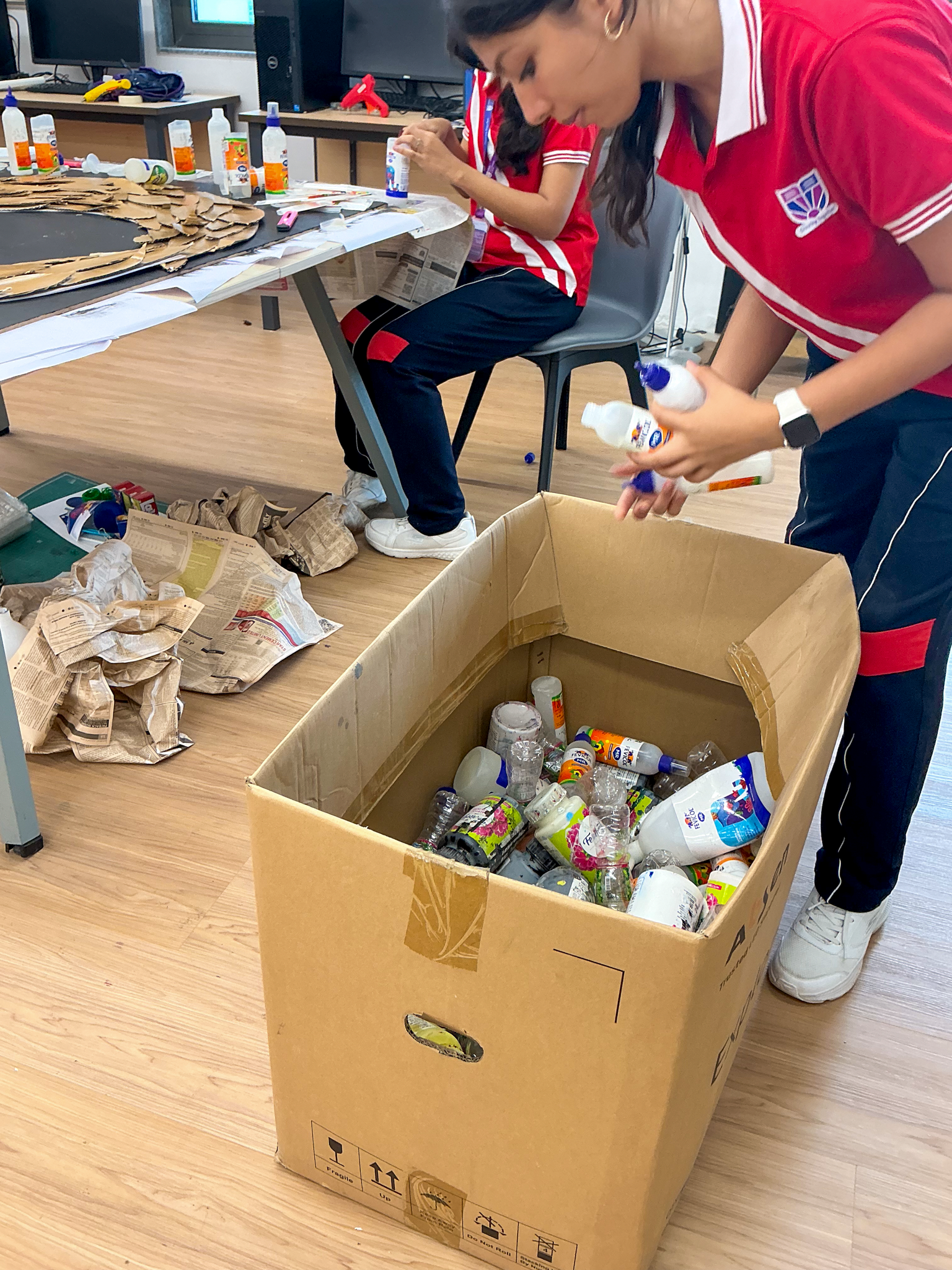
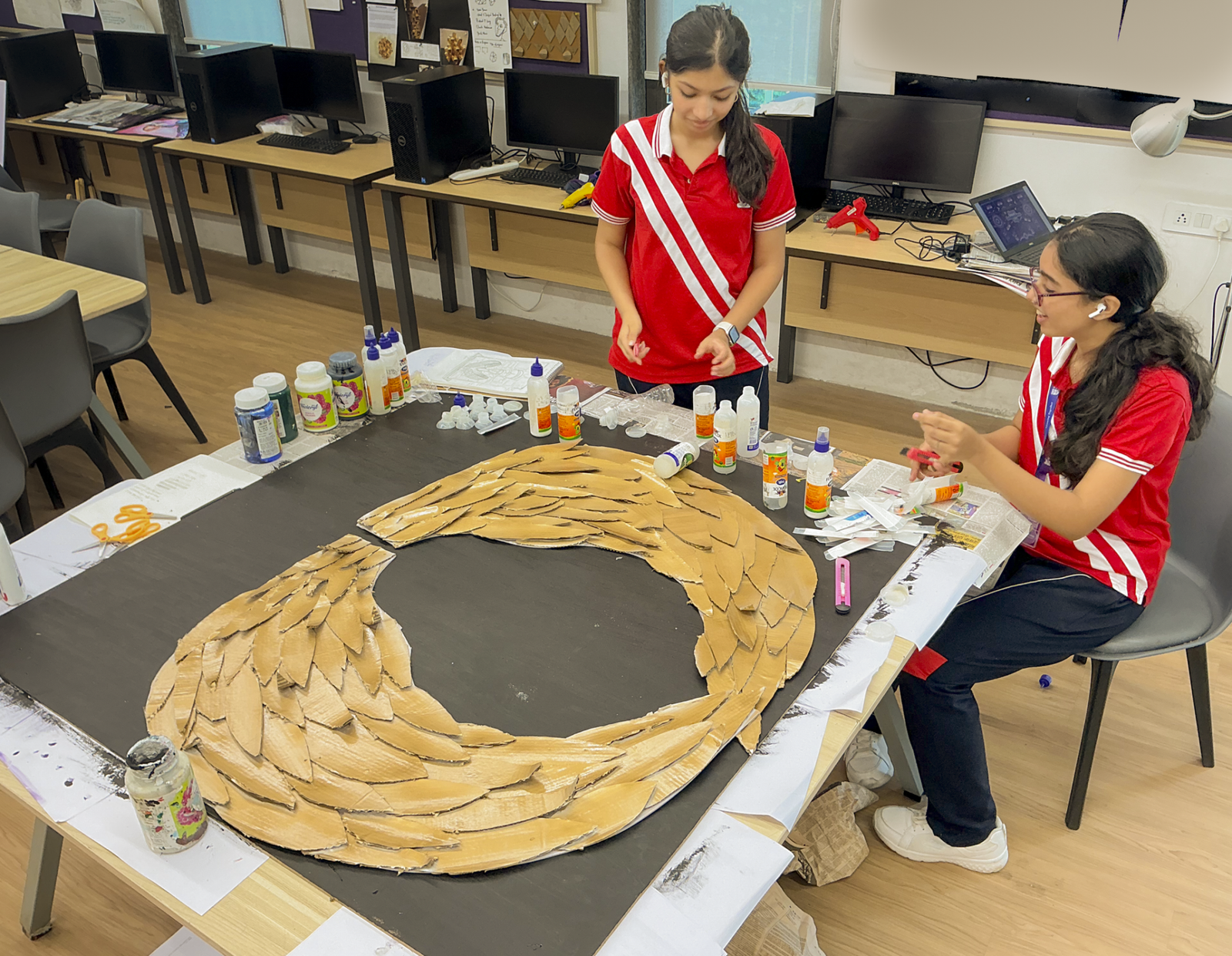
WIP images – 5
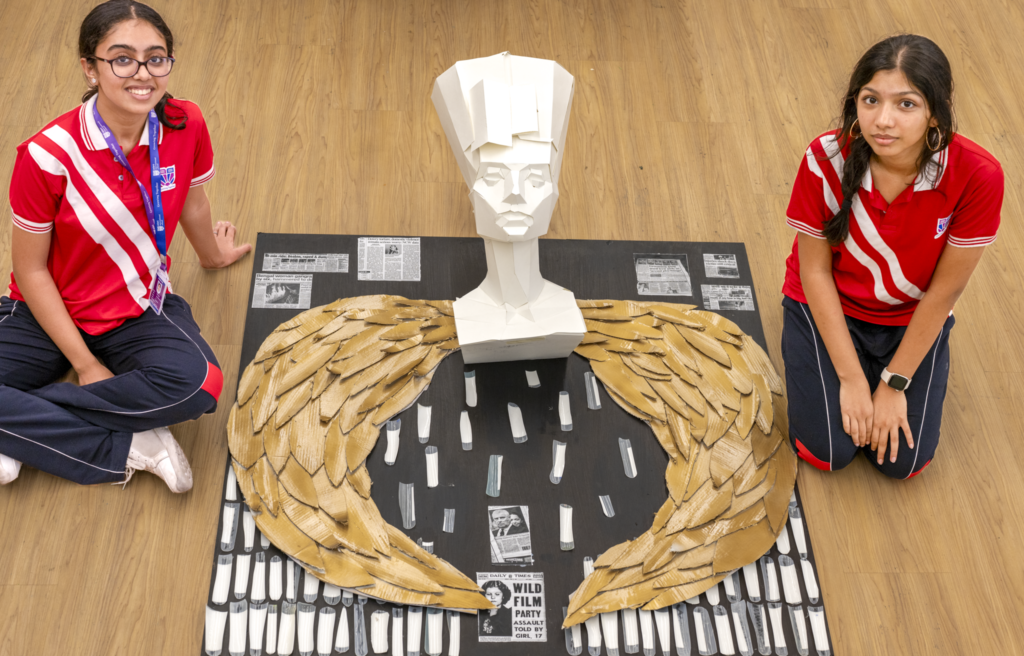
Echoes Beneath the Surface is our collaborative mixed-media installation exploring the
contradiction between how women have been celebrated throughout history and the realities
many women continue to experience today.
At the centre of our work is a geometric bust inspired by Queen Nefertiti, whom we use as an
icon of time, cultural memory, and the historical representation of women. Across cultures,
women have been represented as goddesses and symbols of beauty, wisdom, fertility, strength,
and power. Yet these idealised images often exist alongside realities of dowry, social
stereotypes, inequality, restricted agency, and violence. Nefertiti therefore becomes a bridge
between historical representation and contemporary experience.
We deliberately represented her through geometric and fragmented forms rather than an
organic human figure. The transformation of the organic form into simplified geometry reflects
how a woman’s complex identity can become reduced or fragmented by social expectations and
systems of representation. It suggests a fading identity beneath the image society creates of
women.
The large golden wings, made from discarded cardboard, represent an imagined “golden
era”—an ideal of dignity, freedom, protection, strength, and empowerment. However, the wings
gradually give way to falling feathers made from discarded plastic bottles. The plastic
represents contemporary time: technologically advanced and materially progressive, yet
increasingly defined by consumption, disposability, and unresolved social inequalities. The
contrast between gold and plastic becomes a visual tension between the ideal of progress and
the reality beneath it.
The background is constructed from newspaper clippings and documented reports
concerning gender-based violence and discrimination. These fragments represent stories that
are repeatedly recorded and circulated but can remain unresolved. The black markings across
the documents suggest silence, concealment, censorship, and the tendency to overlook
uncomfortable realities.
Our use of discarded materials is intentional. Cardboard, plastic, paper, and newspapers are not
simply construction materials; they become metaphors for value, consumption, identity, and
neglect. By transforming discarded objects into meaningful forms, we question what society
chooses to value, preserve, overlook, or discard.
Through this work, we ask:
If society has progressed technologically and materially, have we progressed equally in
our understanding of dignity, identity, safety, and equality?
Price: INR 12,000/-
Art Prints:
A2 size Archival Digital Canvas Print (PP) Edition of 6: INR 12,000/-
A2 size Non Archival Digital Canvas Print (PP) Edition of 6: INR 9,500/-
The Team and Artwork
Amazing 🤩 just wow
Beautifully created.
Amazing work😍
Amazing art work
Amazing art work. 👏
Amazing work Jazz, Your art speaks where words fall short. Pure talent
Superb work done…amazing girls..
The art beautifully conveys the message that human capabilities have no limits and that nothing is impossible. The students have done a truly commendable job bringing this vision to life!
amazing aetwork👌👌
Beautiful work, Jazz and Bhairavi! Turning waste into something so elegant and meaningful is truly inspiring. 🌟
Really spectacular artwork…
Really amazing artwork…
It’s really amazing.
Just woww😍🤌
Superb 👌